_heic.png)
About the Artist
Art shaped by paper, space, and time.
Natalia Correa, born in Medellin - Colombia, is a visual artist and interior designer based in the United States. Her work exists at the intersection of art and design, informed by a deep understanding of space, materials, and scale.
After an early period of exhibitions in Colombia and the U.S., she paused her artistic practice while developing her career in interior design. Those years refined her sensitivity to proportion, texture, and the way objects inhabit a space.
She later returned to art through teaching, where she rediscovered the expressive potential of paper. What began as an exploration of material gradually evolved into a sustained sculptural practice.
Today, her work focuses on wall pieces, vessels, and objects conceived to integrate naturally into contemporary interiors, quiet forms that bring presence without imposing it.

Trayectory


Education
Juvenilia School and Art Center
Selected Solo Exhibitions
2008
Otherness (Otredad)
Colombo Americano Cultural
Center Cali, Colombia
2007
Macarena Show Bar
Miami, Florida, USA
2006
COOK 917 Café-Gallery
Cali, Colombia
Umbral del Arte Studio
Cali, Colombia
Selected Group Exhibitions
2010
Autonomous University of Cali
Cali, Colombia
2007
Women in the Arts 2007
America’s Museum
Miami, Florida, USA
Art in Miami
Diego Victoria Fine Art & Elite Art Edition
Miami, Florida, USA
2006
New Horizons
Salome Fine Arts
Miami, Florida, USA
Man, Art and Environment
Regional Autonomous Corporation of Valle del Cauca
(C.V.C.) Cali, Colombia
1993
La Merced Archaeological Museum
Cali, Colombia
Chamber of Commerce of Cali
Cali, Colombia
1990
Jenny Vila Gallery
Cali, Colombia


The Process
1.
Material Preparation
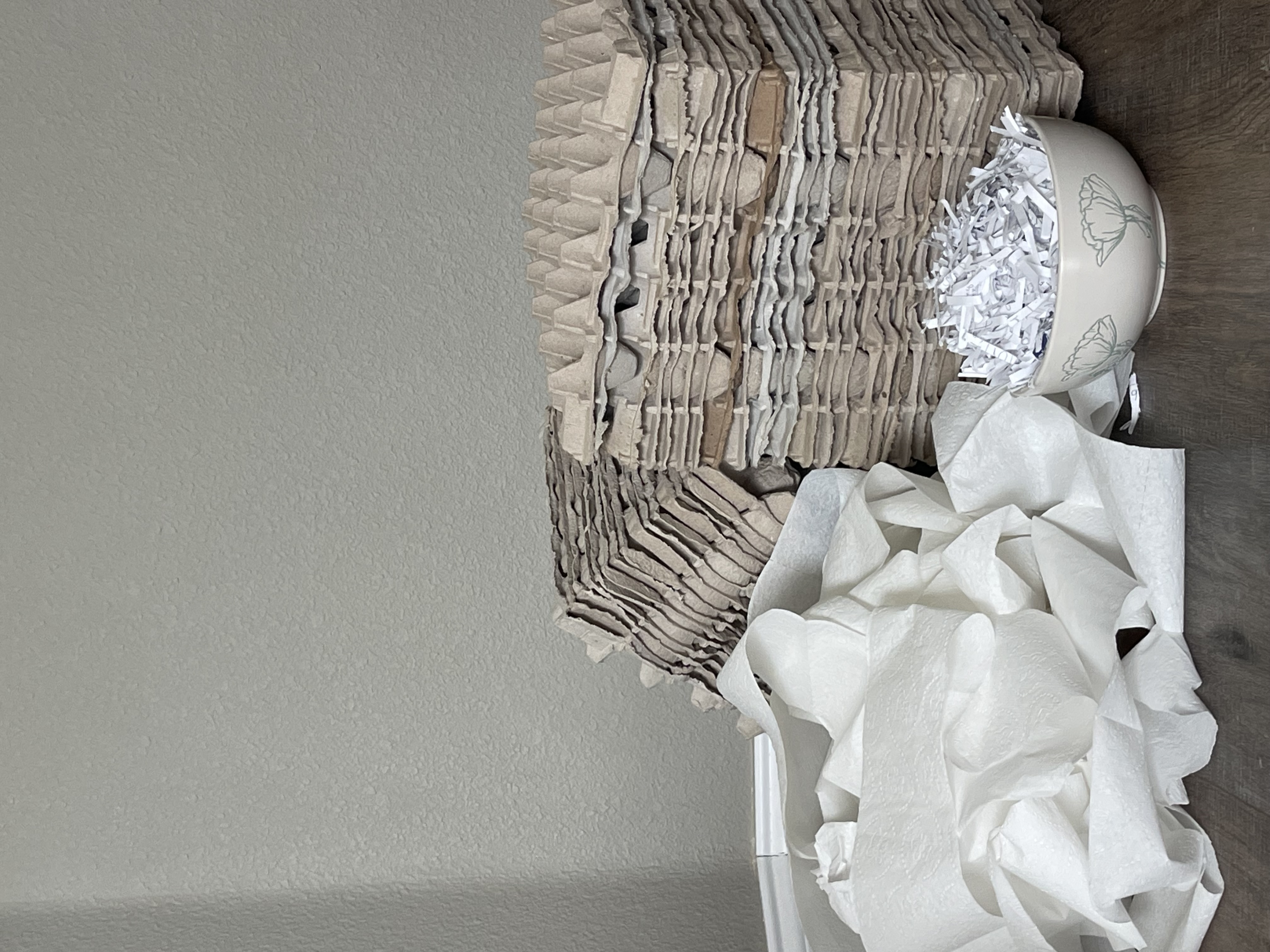
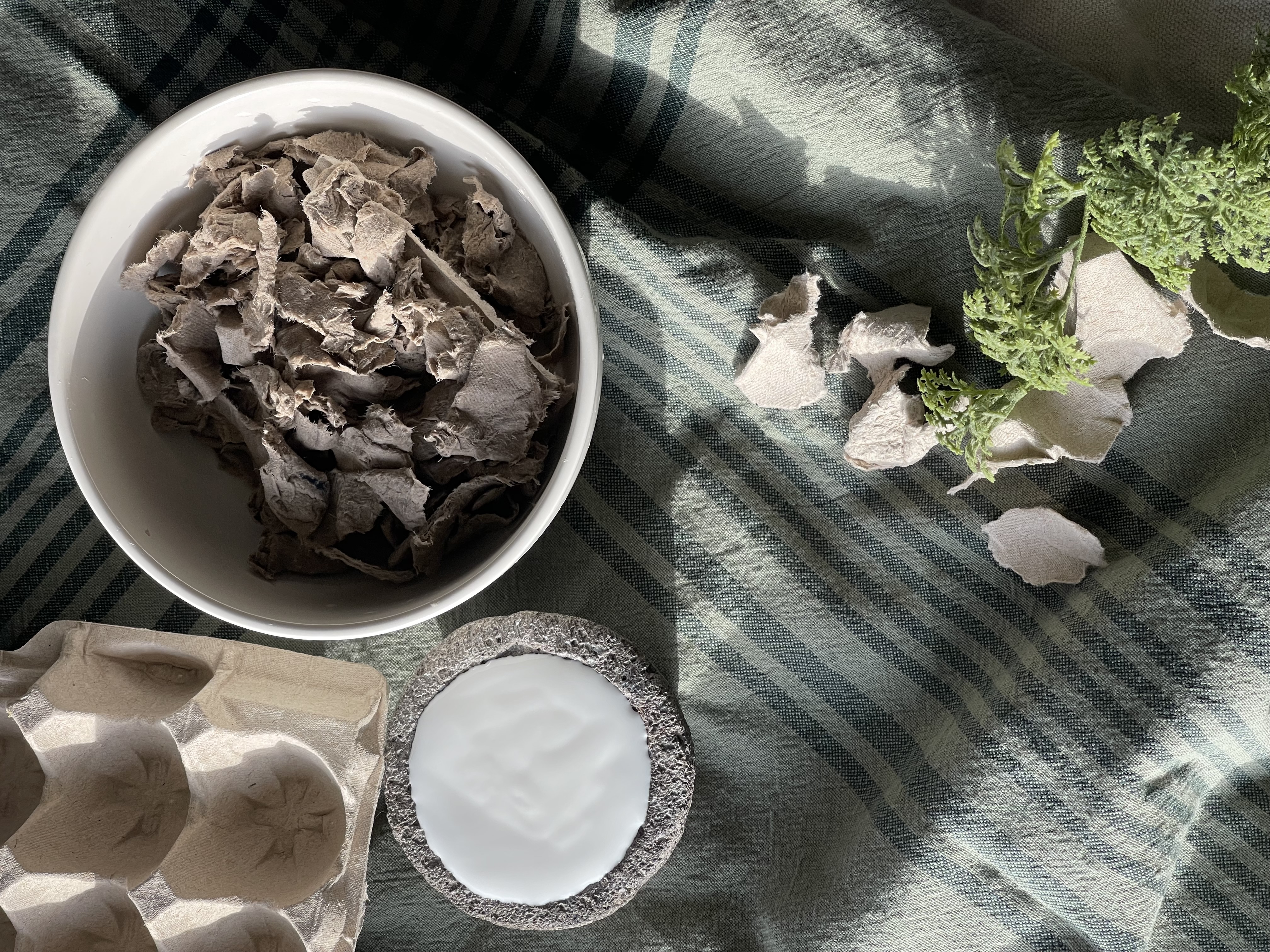
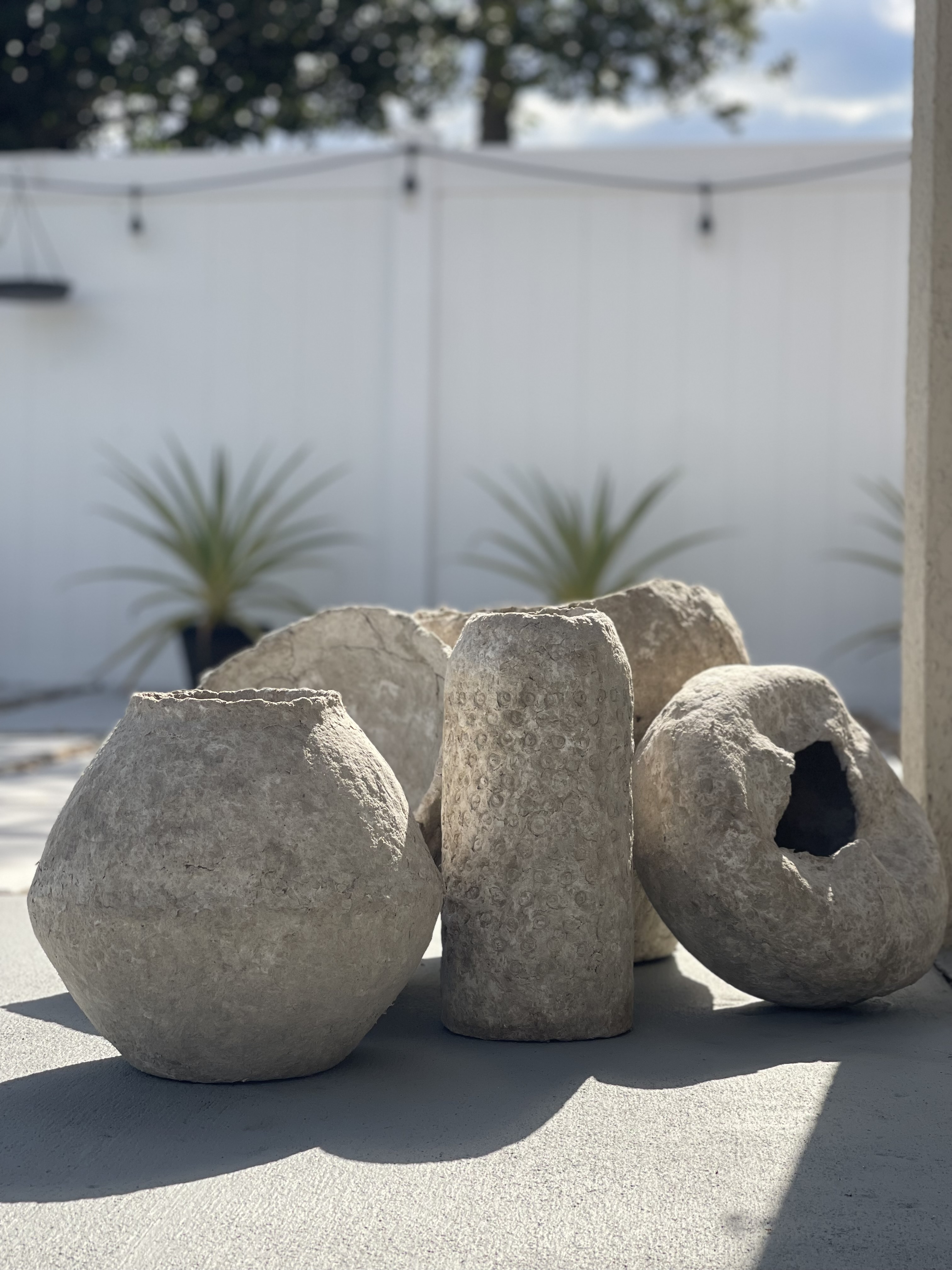
Paper is transformed into a dense, malleable clay. Egg cartons, the primary material, are processed and combined with other elements until a homogeneous paste is achieved, capable of holding structure while remaining responsive to touch.
2.
Shaping by Hand
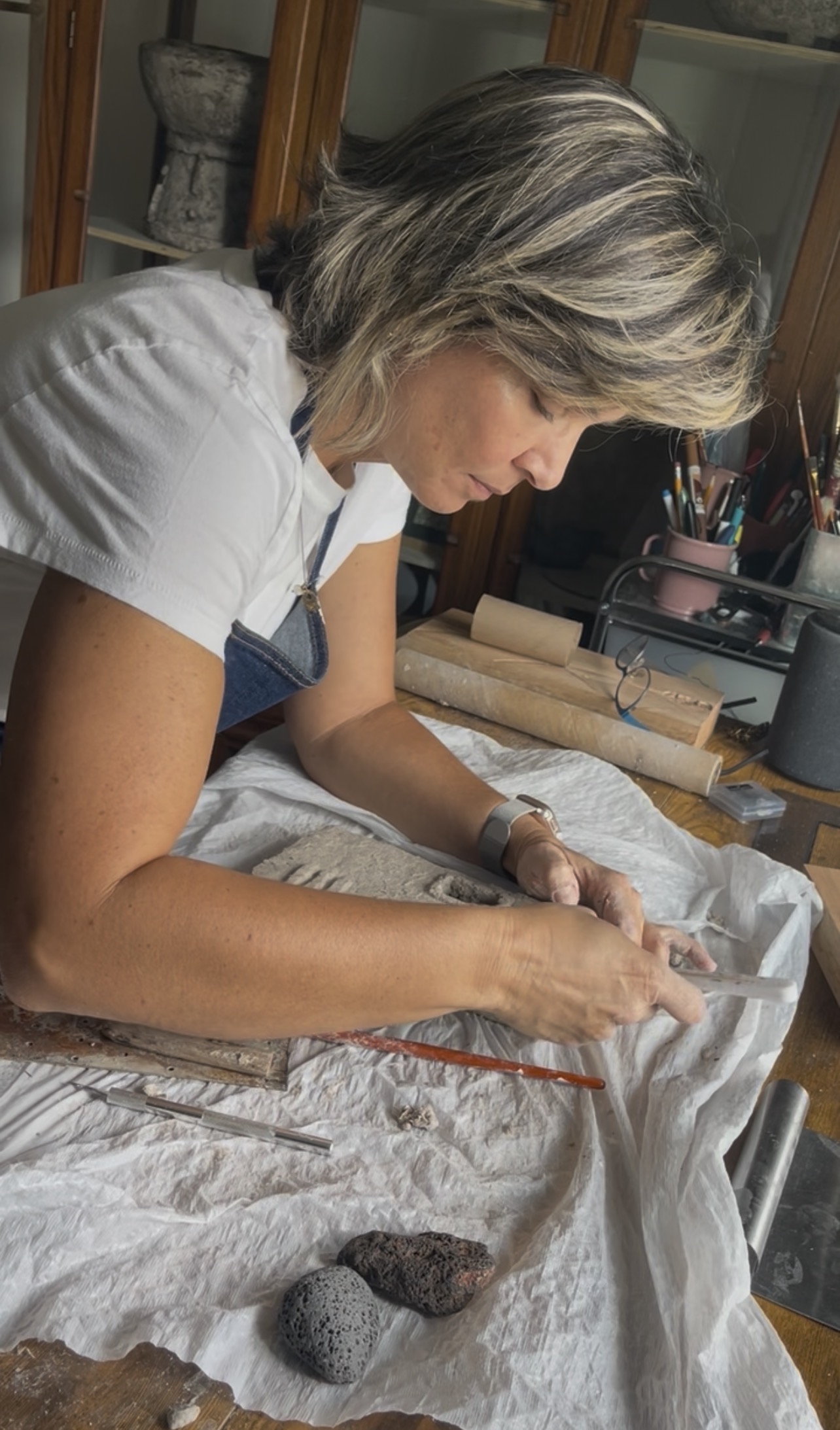
Working directly by hand and without molds, each piece begins to take shape. The material’s resistance, weight, and flexibility guide the development of the form as much as the initial idea.
3.
Layering & Refinement
Layer by layer, structure emerges through shaping, drying, carving, and adjustment. Surfaces are refined while preserving subtle irregularities that reveal the handmade process.
4.
Texture & Presence
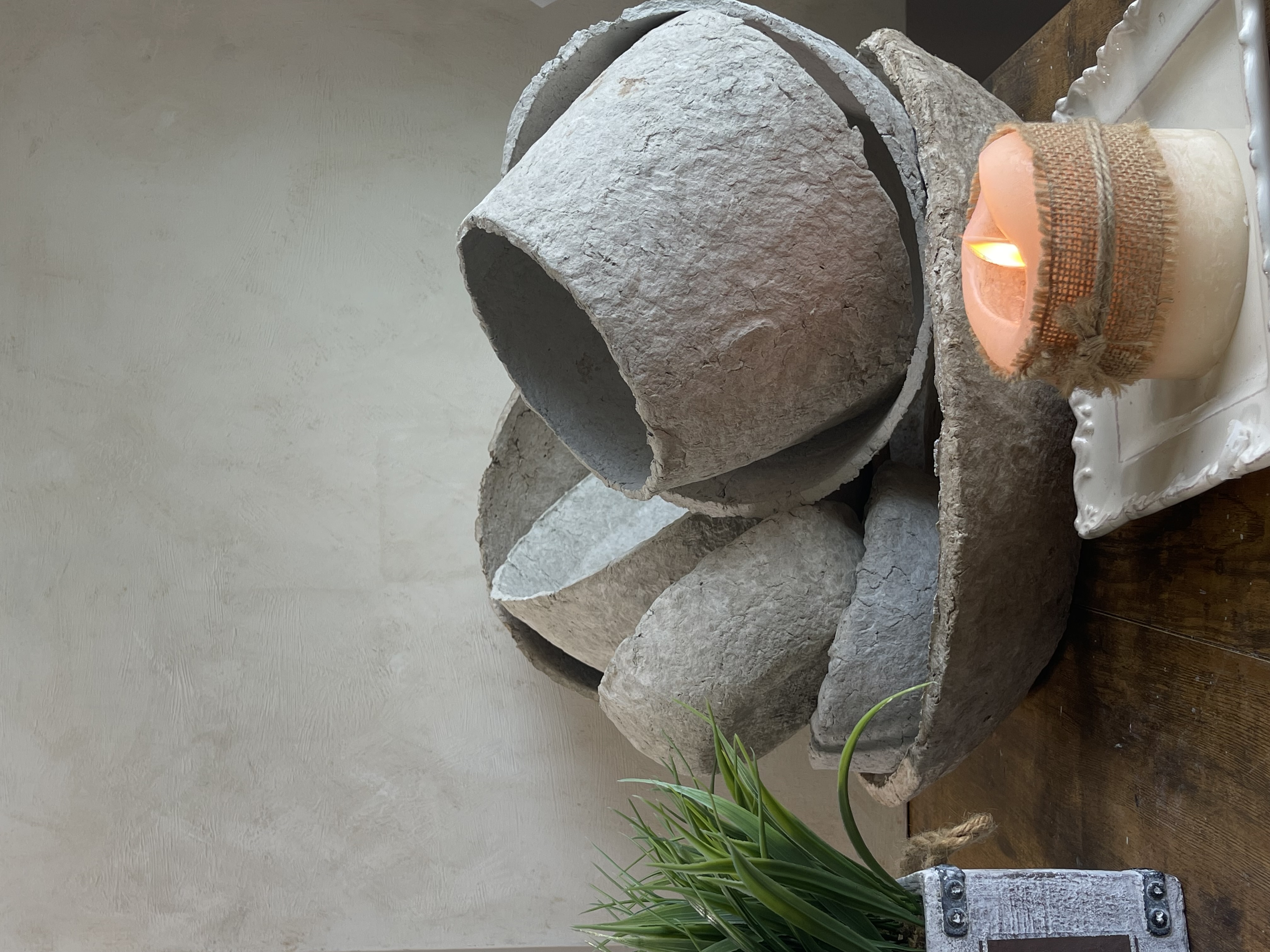
The finished work retains visible traces of its making: fibers, textures, and tonal variations that emphasize tactility and material honesty, transforming fragile paper into a lasting sculptural object.

Approach
Each piece is conceived as a singular object, not only decorative, but atmospheric.
Designed to coexist with interiors rather than dominate them, these works aim to introduce texture, warmth, and a subtle emotional presence.
Paper, in this context, becomes structure, surface, and narrative at once: a material capable of conveying both fragility and strength.